
Diary of a Shopkeeper, 12th April
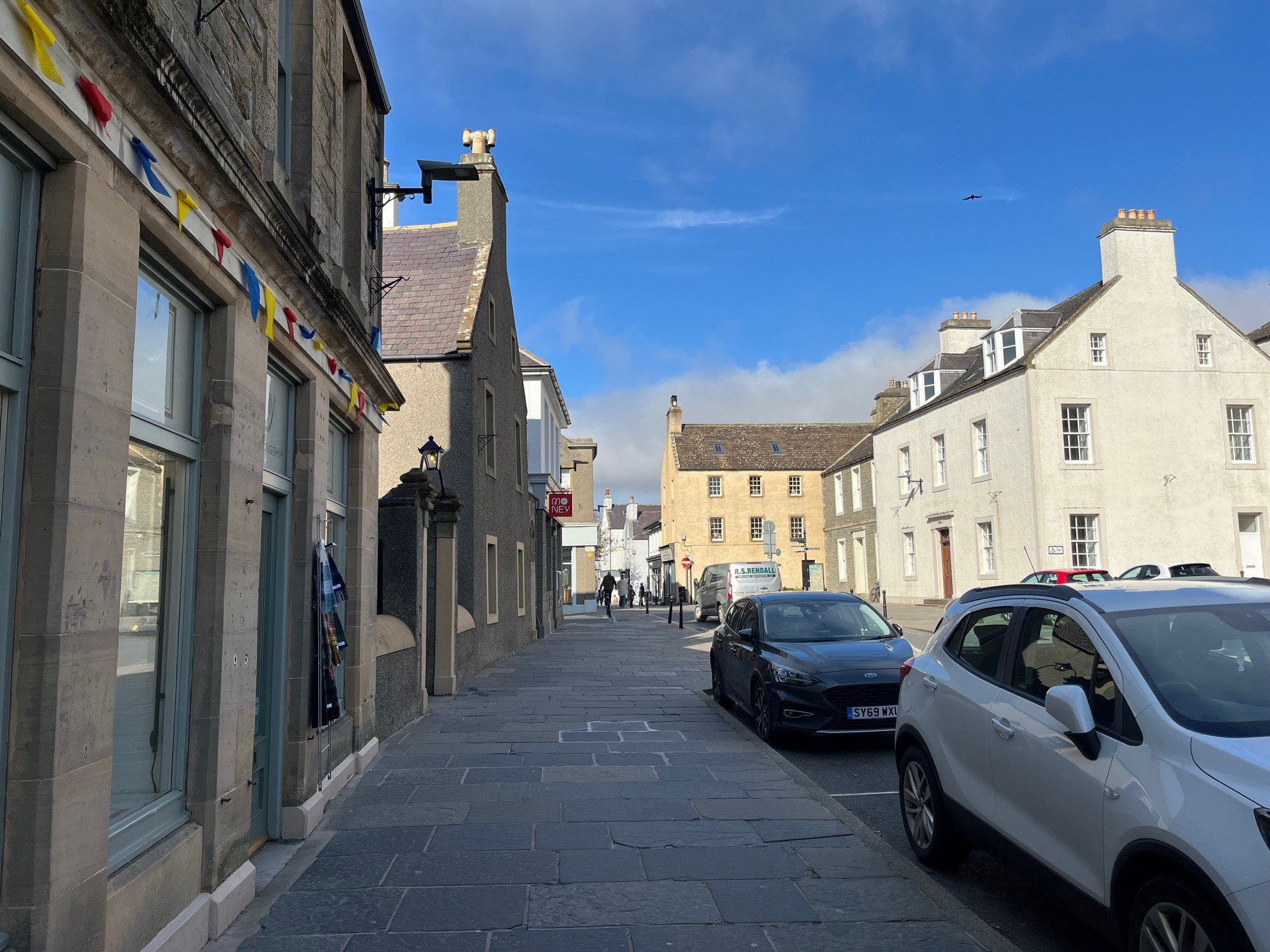
Tuesday 14th: this is what 2,043 cruise passengers lools like.
We’re at that stage of springtime where two or three cruise liners berth in Kirkwall each week. By the time we get to the middle of May, it’ll be six or seven, and stay like that till September. Some of the liners carry 2,000 or more passengers, a sufficient number that you’re likely to be aware of them down the street. Most are far smaller, with 620 or 184 passengers. Many have fewer than 100 people on board. These boats are no more noticeable than the Varagen, and the passengers melt into the background.
Whether large or small, intrusive or invisible, the first liners always prompt the same questions from our customers, questions we’ll be asked all summer: ‘Do the cruise folk come down to K&G?’ Yes. ‘Do they actually spend any money?’ Yes: quite a lot on a good day. But behind those positive answers lies my One Big Idea (OBI) about the cruise industry. Which is: ‘Cruise is just one part of the ecosystem of tourism.
In ecology, an ecosystem consists of various living creatures in a specified physical location. Despite being separate organisms, they’re mutually dependent. The location is more than just a neutral background: changes in the place affect the creatures, and changes in the creatures affect the place. My OBI is that Orkney tourism is an ecosystem made up of three species.
The first is the independent traveller. These arrive in small groups, usually couples or families, sometimes groups of friends. They come by plane or car, and stay in hotels, B&Bs, or self-catering accommodation. A subset of the independent species is the motorhome traveller. These are highly visible, because their vehicles are large and occasionally cause frustration for drivers stuck behind them on narrow roads. This species tends to nest in groups in specific locations like the Picky, the Point of Ness, and Birsay Campsite.
The second type of tourist creature is the cruise passenger. As noted above, they can be seen in small as well as large groups; what they all have in common is that they don’t stay here long. They arrive at eight or nine in the morning and leave at five or six in the afternoon.
The third and least visible tourist creature is the small group traveller. These visitors arrive on minibuses in groups of eight or ten. Sometimes they come just for the day, arriving on an early Pentalina and leaving on a late one. Other times they stay for several days, making the most of dinner, bed and breakfast deals provided by local hotels. (Some hotels make a large proportion of their summer income from these groups.) Because the minibuses tuck themselves away in different carparks across the county, they’re not as visible as motorhomes. Most local folk aren’t aware of the size and variety of this visiting species, unless they have an involvement in one of the many special interests these groups are dedicated to. I can immediately think of specialist groups interested in birdwatching, Neolithic history, naval history, food and drink, Shetland ponies, goose shooting, Orkney ancestry, folk music and knitting. No doubt that list could be extended.
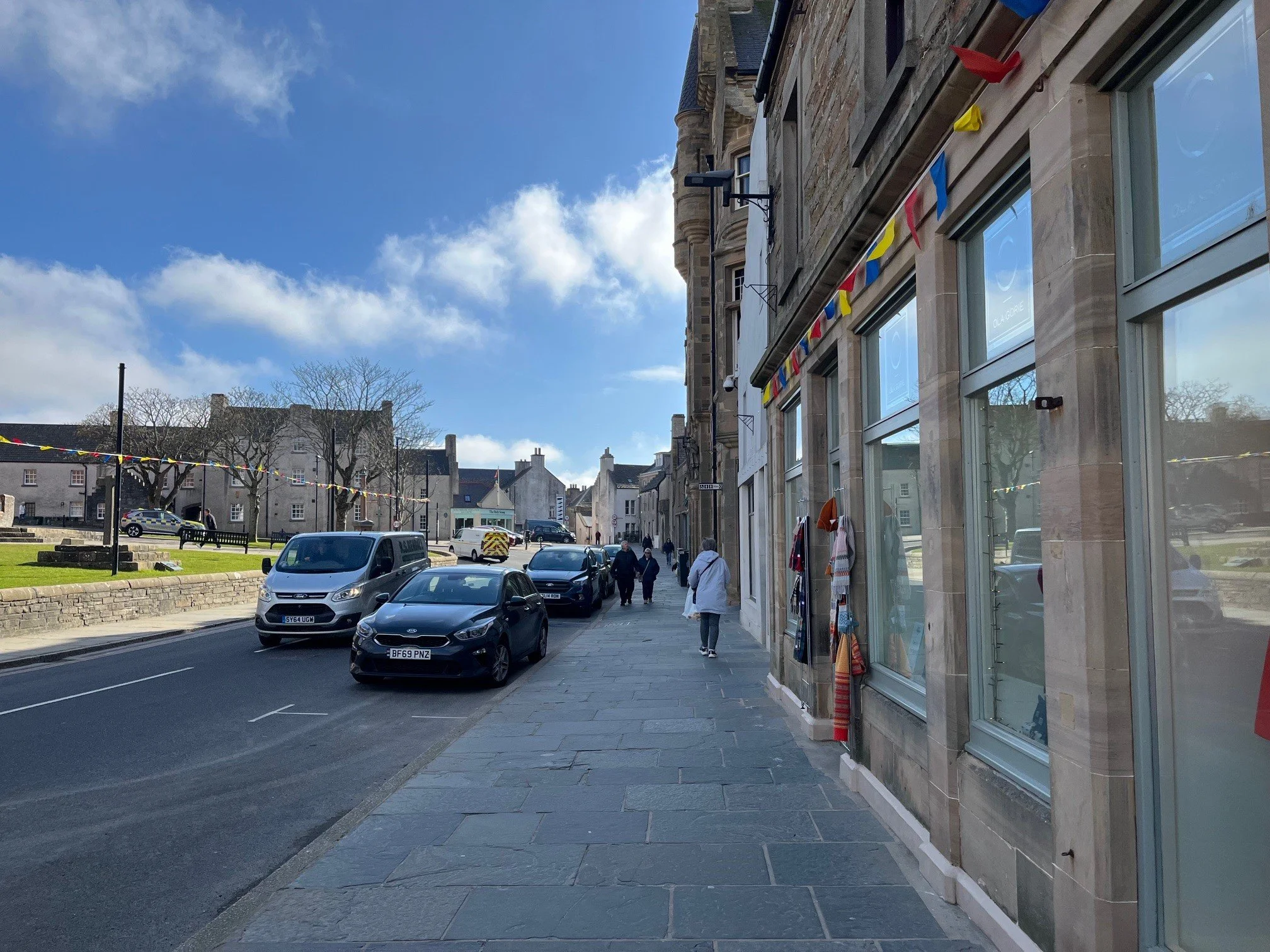
Too crowded for local shoppers on liner days?
Here’s the important bit about my OBI: mutual dependence. Each of these three types of tourist has different needs. Independent travellers need overnight accommodation for their stay. They visit all the historic sites and need entertainment for the bairns. Some eat out and need restaurants, some eat in and need food shops. Having said that, for the likes of us in K&G and other independent shops, the following conversation is a painfully common one:
Visitor: ‘We’ve been here a week had a great time. But we’re leaving tomorrow so I can’t buy anything.’
Shopkeeper (through gritted teeth): ‘That’s a shame…’
Visitor: ‘We didn’t know if there’d be any shops on Orkney, so we loaded up the car at home and took all our food with us.’
Cruise liner passengers don’t need accommodation. What they do need is bus drivers and tour guides. They need drinks in pubs and cafes, and they need lunch or a snack as they wander the town centre. Above all they need souvenirs for themselves, and gifts to take home: whisky, gin, beer, fudge, oatcakes, cheese. And Orkney jewellery, knitwear and other craft. Small specialist groups don’t tend to shop much. They’re here to follow up their special interest. They do need a hotel to stay in, and somewhere to eat every night. Hotels sometimes do packed lunches, or cafes benefit when the groups are out an about. They may do some shopping while they’re here, but that’s not the focus of their visit.
All three types of visitor are necessary for the Orkney tourism ecosystem to thrive. Without independent travellers, self-catering would collapse. Without other independents, and small groups, hotels would lose a big part of their income. Without all groups, but especially cruise passengers, many Kirkwall shops and casual eateries would struggle to survive in their current form. If shops and cafes disappeared, the town would be far less attractive to all visitors, provide less employment, and be a sorry sight in the long winter months. The town needs shops and cafes, and shops and cafes need cruise.
But…remember the OBI: the key to a healthy ecosystem is balance. No one element should dominate, or the others will suffer. The ecosystem must be managed and cared for. As sustainable tourism expert Professor Harold Goodwin put it, ‘We either use tourism or we are used by it.’
This diary appeared in The Orcadian on 16th April 2026.. A new diary appears weekly. I post them in this blog a few days after each newspaper appearance, with added illustrations, and occasional small corrections or additions.