
Diary of a Shopkeeper, 14th June
Scottish football fans have been given a warm welcome in Boston at the start of their World Cup campaign. I’ve been in Boston a couple of times, first on a book tour, and then selling Ola Gorie jewellery to one of a series of ‘I’m Three-Eighths Scotch and I Want to Wear my Heritage’-type shops that we supplied across the northeastern States. That was twenty years ago, but the friendliness and unforced generosity of everyone I met then does not seemed to have diminished. Not to anyone in a kilt, at least.
And I’m happy to say the warm welcomes are not all on the other side of the Atlantic. Almost every day tourists in the shop thank me and the other staff for being so friendly and welcoming. We don’t try to be friendly and welcoming. We’re mostly just being nosey – asking people where they’re from, and what kind of cheese they eat there – and patriotically proud – extolling the virtues of Orkney whisky, gin, rum and beer, not to mention oatcakes, fudge, shortbread and a hundred other products. (This weekend we were able to flabbergast a few Texan tourists by inviting them to try Tasty Jake’s newly launched Orkney Beef Jerky. They were surprised and delighted. For us, the only surprise is that, with so much great beef produced here, no one has thought of it till now.)
I’ve written it before in these columns, but it bears repeating: wherever I’ve travelled in the world, I’ve been met – whatever the linguistic, cultural and political differences – with kindness, hospitality, and all the best of human qualities. Have I encountered unpleasant individuals? Of course I have, a few. But no more than I would meet walking down Broad Street on my way to work. Likewise, wherever international visitors to our shop come from – and this year we’ve already had Canadians, Columbians, Brazilians, South Africans, Irish, French, Italians, Swiss, Japanese, English, and Americans from a dozen states – they’ve all been polite, friendly, and genuinely interested in Orkney and its people.
This past week we’ve seen a small number of masked men in Belfast, Glasgow and several English cities threatening, harassing and attacking people from other places. Even if those people have made Belfast or Glasgow their home for many years, and have contributed much to their community. It’s very hard to square the circle that contains both the humanity of the individuals I’ve met around the world, and the inhumanity of those attacking their fellows just because they come from elsewhere – or they imagine come from elsewhere, based on their skin colour.
They only way I can make sense of it is to look, not at the people doing the rioting, but at the individuals behind the scenes encouraging them, funding them, and goading them into their inhumane actions. They’re a remarkable collection of tax exiles, crypto-currency billionaires and owners of private companies masquerading as political parties. All have their own agendas, invariably based on accumulating more power and wealth for themselves – and never materially benefitting their foot soldiers. Their analyses of the political and economic pressures that drive population movement are deliberately simplistic, designed to stir up fear rather than deepen understanding. In Orkney we’ve seen no sign of this latest eruption, thank goodness, though only a starry-eyed romantic would believe the county is devoid of racism of various sorts, and of the fears and fantasies that fuel it.
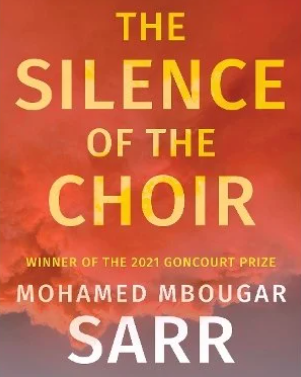
Rather than base beliefs on the fictions of those with vested interests in stirring up trouble, I’d much rather learn from works of fiction that exist to explore the complexities of the immigrant and resident populations, and their varied and sometimes conflicting priorities. One fine example is the novel The Silence of the Choir by Mohamed Mbougar Sarr, a French-language writer from Senegal. It depicts the arrival of 72 small-boat immigrants on the shores of Sicily. Chapters alternate between the points of view of health care workers, local politicians and priests, anti-immigrant activists, the immigrants themselves, and their new neighbours – some welcoming, some anxious. The book refuses to reduce any part of the situation to simplistic expressions of problems, or simplistic solutions.
Sicily is much bigger than Orkney, but another Italian island, Lampedusa, is slightly smaller than Westray, and home to 6,000 people. It lies one hundred miles south of Sicily, and only 60 miles from the north African coast. Its location has made it the first landfall for many Africans trying to get to Europe, a situation that was memorably and movingly captured in a film documentary, Fire at Sea, released in 2016. Again, there are no simplistic questions or answers, just a chorus of different voices, speaking from the heart.
If those sunbaked islands seem too far away to relate to, George Mackay Brown’s Beside the Ocean of Time, is, amongst other things, a study of waves of immigration to, and emigration from, Orkney. His mingling of myth, dream and cold reality provides a complex picture of population movement here over two millennia. Taking a long-term view seems a sensible approach. In the end the human virtues persist longer than the vices. As Martin Luther King said, ‘the arc of the moral universe is long, but it bends toward justice.’
This diary appeared in The Orcadian on 18th June 2026. A new diary appears weekly. I post them in this blog a few days after each newspaper appearance, with added illustrations, and occasional small corrections or additions.