
Diary of a Shopkeeper, 24th May
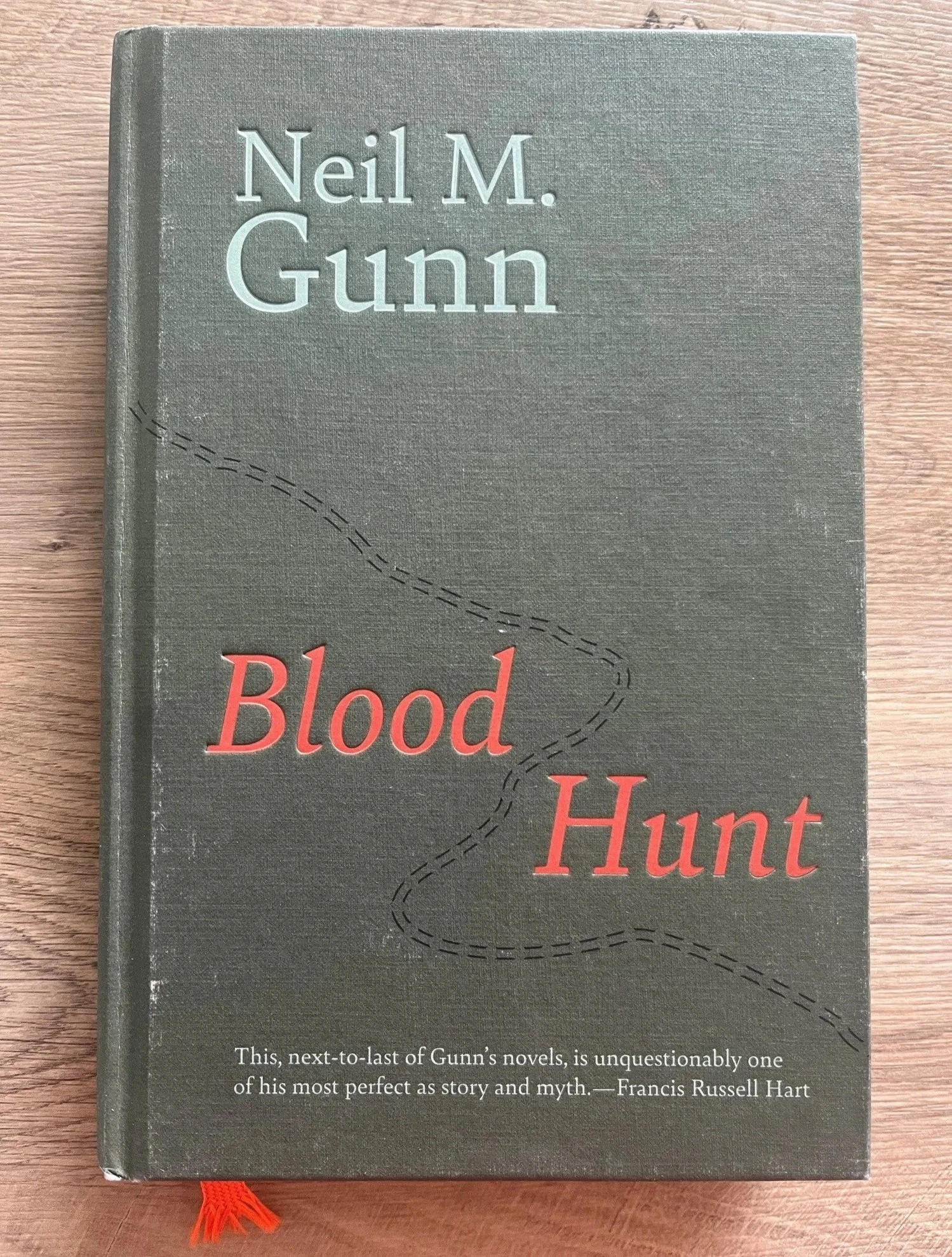
North House Press is celebrating the centenary of the first novel by one of Scotland’s most important writers, Neil Gunn, by reissuing three of his books. This is my third and final look at the new editions. A fortnight ago I considered Gunn’s debut, The Grey Coast, and last week I looked at The Serpent, from 1943, when he was at the peak of his success. Now we turn to Blood Hunt, published in 1952, and reprinted in a handsome hardback with suitably blood-red endpapers.
After this, Gunn published only one more novel, The Other Landscape, in 1954. Although he lived till 1973, he felt discouraged by the lack of critical appreciation and commercial success his later books received. For the last twenty years of his life, he wrote stories and essays, and assisted with radio and TV adaptations of his work, but produced no extended fiction. It’s hard to see now why late novels like Blood Hunt were not more widely appreciated at the time. Of the three North House reprints, it’s the most accomplished and most enjoyable, a gripping read that effortlessly smuggles in moral and philosophical debates almost without the reader noticing. It’s a novel that is powered by a simple but ingenious dramatic situation. Once Gunn sets the narrative motor going in the book’s first paragraphs, it uncoils like a powerful spring, propelling the story to an ending that is unimaginable – until it arrives, at which point it seems inevitable.
It is the early 1950s. Sandy is a retired merchant seaman, living in a small croft in the hills outside his native village in Caithness. ‘He lived beyond the edge of the ordinary world,’ it is said. He lives an exceedingly simple life, almost self sufficient. He milks his cow, feeds his hens, talks to his collie. He has never married – though we hear memories of a doomed wartime romance with an Italian girl – and he has no worldly ambitions. ‘I only want to be left alone,’ he exclaims at one point.
But the world leaves no one alone, not for long, not even those who desire a peaceful solitary life.
In the opening lines of the novel, Sandy is disturbed by the local policeman, who brings news of a murder. The policeman’s own brother has been killed by a local lad, Allan, an occasional helper on Sandy’s croft. The policeman’s blood is up, and he insists on searching the house and steadings, despite Sandy’s protestations that he hasn’t seen Allan recently. That truthful statement becomes a drama-fomenting lie when, in the barn, while the policeman searches a pile of hay, Sandy spots Allan, his face blood-smeared, hiding in the shadows. Sandy’s instinctive reaction is to help his friend avoid detection, concealing him behind the barn door. The policeman leaves, promising to return, and the plot whirrs into unstoppable movement.
For the next 250 pages, the story stays pinned to Sandy’s croft. After he is pulled by his cow and injured, the focus is even more narrow, with the action revolving around Sandy as he lies in his box bed. At the heart of this thrilling tale of murder and vengeance is this surprisingly domestic setting of a peat-fired kitchen, with porridge for breakfast, tea in the pot, and a bottle of whisky for emergencies. I was reminded, bizarrely, of one of Samuel Beckett’s plays, where the characters are trapped in dustbins, or stuck in soil up to their necks. For once, thinking of Gunn as a Modernist began to make sense.
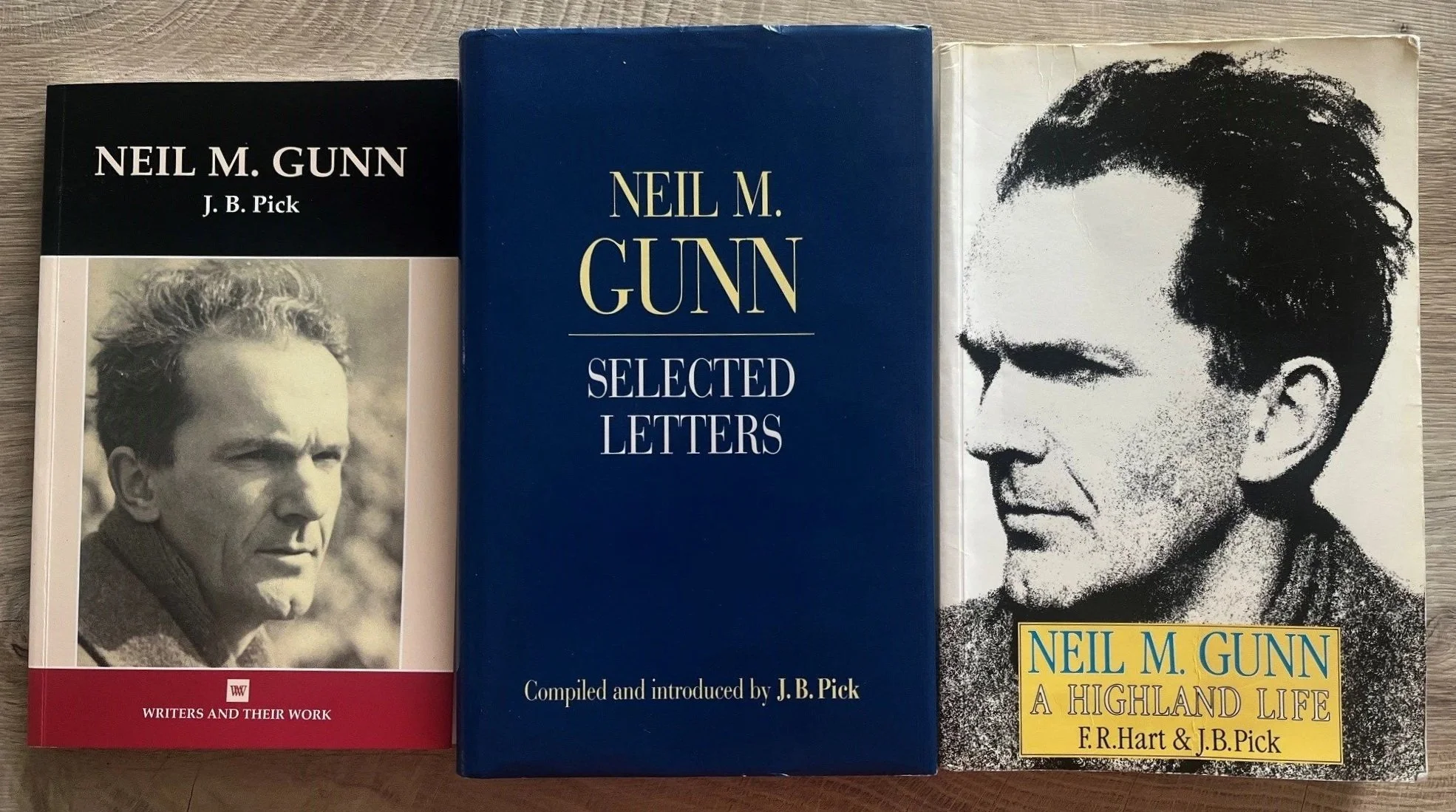
The domestic setting and daily routines of crofting are reminiscent of The Grey Coast. And Sandy’s musing on life, death and nature are amongst Tom’s obsession in The Serpent. Happily, by this late stage in his career, Gunn had moved far beyond the clotted commentary of his first novel: the narrative flows freely, with many vivid images. ‘Broken sleep is as natural to me as broken water to the river,’ says his neighbour, Widow Macleay, ‘We have both been running a long time.’
What’s more, the moral dilemmas that Gunn wants us to consider are not tacked on to the storyline, nor are they chewed over at length. Rather, they are dramatised in the action, made concrete in the choices Sandy and other characters make. In a letter to his friend, the novelist and nature write Nan Shepherd, Gunn wrote, ‘I was visited once by the notion of watching innate goodness behave in illegal ways, trying to see if it is innate and not just Christian.’ Sandy spars with the minister, who takes a strictly Christian view of morality – though without the fierce fire and brimstone of the elders in The Serpent. He also argues about right and wrong with Widow Macleay. Above all, he argues with himself, as the world throws one ethical challenge after another at him, whether he’s out on the moor or stuck in his bed. What if you live ‘beyond the edge of the ordinary world,’ and want to decide for yourself what truly is the right thing to do, without reflexive recourse to the laws and conventions of your community? That is Sandy’s struggle, and to see the honesty and generosity with which he faces up to it, and all it implies, and all the difficulties his decisions bring him, is genuinely moving.
Bravo, Neil Gunn! And bravo North House Press, for bringing this challenging and fascinating writer to the attention of a new generation of readers.
You can read more about North House Press here, and buy all three Gunn reprints at a special reduced price: great value, for three beautifully produced hardbacks.
This diary appeared in The Orcadian on 28th May 2026.. A new diary appears weekly. I post them in this blog a few days after each newspaper appearance, with added illustrations, and occasional small corrections or additions.