
Diary of a Shopkeeper, 26th July
It’s been a quiet week in the shop. Partly this is down to the cold and windy weather, and partly because Mrs Stentorian hasn’t been in. Her last visit was two weeks ago, when, as I reported at the time, she appeared with her sister who was visiting Orkney on holiday. Up to that point Henrietta had never mentioned she had a sister called Henley, let alone two brothers called Henrik and Hennessey. But why should she? Some customers, it’s true, drip-feed me with details from their personal life, as if I’m a therapist in a cheese-stained apron. (‘A little bit of Manchego will make everything alright,’ I tell them, ‘or at least take your mind off your troubles for a while.’)
But Mrs Stentorian never mentions any family member except her father, the bishop, who she talks about a lot. In this respect she resembles Margaret Thatcher, and I wonder if the Iron Lady is an inspiration for her in other ways, not least her armour-plated hairstyle. I didn’t have the chance to ask her on Saturday when her sister reappeared, because on this occasion Henley was accompanied only by a harassed-looking Willie Pickle.
‘Afternoon,’ I called cheerily as they came in the door.
‘It is,’ said Henley, striding towards the counter. ‘It’s half past two: what else could it be but the afternoon?’
‘I suppose I should have put a ‘good’ in front of the word,’ I said.
‘Indeed,’ she said. ‘Standards of polite address are rather lax here. As we have found during my stay. Have we not, William?’
Willie, who was only now reaching the counter, having been trailing in her slipstream, mumbled in agreement. ‘Oh yes Henley, absolutely, we’ve a lot to learn.’
‘For instance,’ she continued, ‘we were dining at small tearoom in the north Mainland, and the waitress failed to address me correctly. I’d made the reservation under the name Much Cowarne and Hope’s Rough, and when we arrived she had the temerity to ask whether I was Mrs Cowarne or Mrs Rough.’
‘When really, you see…’started Willie.
‘As the Countess of these places I should of course have been addressed as ‘your ladyship.’’
‘Of course,’ I said. ‘I mean, of course, your ladyship.’
‘Such disrespect cannot go unpunished,’ she said, ‘so I asked Henrietta to make my displeasure known to the tearoom manager.’
‘How did that go?’ I said.
‘I couldn’t hear the details of the conversation but suffice it to say Henrietta will not be returning there anytime soon.’
‘And even if she did,’ said Willie, ‘they wouldn’t let her in. It’s a shame, their cheese scones are the best.’
‘Speaking of Henrietta,’ I said, ‘isn’t she with you today?’
‘No,’ said Henley, ‘she complained of a headache and tiredness, and is having a lie down.’
‘In a darkened room,’ added Willie.
‘We didn’t have a particularly strenuous day,’ said the countess. ‘When I entered her in the Shopping Week arm wrestling competition, I thought it was obvious that her name was a placeholder until I could confirm William’s participation. But no! Her name was on the form, so she had to do the wrestling.’
‘She did well,’ said Willie, ‘won third prize. But it took a lot out of her.’
‘Bronze in the arm wrestling?’ I said. ‘Who needs the Commonwealth Games!’
‘And now I’m on my way to your little airport to start my journey homewards. But I insisted William bring me in here before my departure.’
‘Some gin to take with you?’ I asked hopefully, remembering the 15 bottles she’d purchased a fortnight ago.
‘No, it’s this wonderful foodstuff Gregor Lamb wrote about in your local newspaper last week.’
‘I remember his column about ‘Why are we called Orcadians,’’ I said, ‘Very interesting. But not anything about food.’
‘Let me quote verbatim,’ she said, and pulled a folded piece of newsprint from the pocket of her tweed jacket. ‘“Poor Orcadians eat quawiuers because they are hungry.”’ That’s what I want to take away as my souvenir of a memorable holiday: quawiuers.’
Do you have any quawiuers, beuy?’ said Willie. ‘It would make her ladyship very happy if you did. And we all want that.’
I looked at him. I looked at her. I looked into the middle distance and then I looked into the depths of my soul. Then I realised what I had to say.
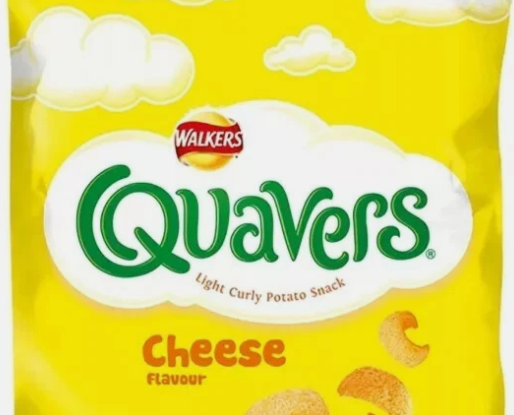
‘I don’t have any, I’m afraid. But if you go along to Bruce’s Stores, I know you’ll find them there – next to the crisps. The word is pronounced slightly differently now: it’s ‘Quavers’ and they come in a crinkly yellow packet. You should find a choice of flavours too: cheese, barbecue sauce, and – a refection of the excellent seafood to be found in Orkney’s waters – prawn cocktail.’
She nodded briskly and turned on her heel, bustling past Willie and out the door of the shop.
Willie sighed heavily then plodded after her ladyship. ‘I better catch her up,’ he said, ‘before there’s an international incident.’
‘Good luck,’ I called after him. ‘And give my best to Henrietta. Tell her…tell her…I feel her pain.’
. . .
Later in the day I was able to do some research about Gregor Lamb’s mysterious ‘quawiuers.’ I thought it worth writing to the Postbag about what I’d found, as follows:
I believe I can help Gregor Lamb with the mysterious food stuff “quawiuers” that he found in a 1661 treatise. (Orcadian, July 23rd.) The context was, “poor Orcadians eat quawiuers because they are hungry.” This refers to the greater weever fish (Trachinus draco.) “Quh-” was common orthography for the “wh-“ sound at this time, and “u” and “v” were interchangeable: reading the word with those substitutions reveals the modern pronunciation.
In one of the earliest English books advocating a healthy diet as the road to good health, Thomas Muffet wrote, “Quawiuers, for so the Scots and Northern English term them, are very subtile and crafty Fishes.” Muffet’s book, Health's Improvement, was published in 1655, years after his death, but perfectly timed to confirm the meaning of Robert Lovell in the sentence Mr Lamb quotes.
At that time, the word “subtil” meant cunning, as in the famous line from Genesis in the King James Bible: “Now the serpent was more subtil than any beast of the field which the Lord God had made.” The greater weever is “subtil and crafty” for two reasons. One is that it habitually buries itself in sandy seabeds, making it very hard to spot. The other is that it has venomous spines that can kill potential predators and cause acute pain to humans who stand on them accidentally, or are careless when extracting them from fishing nets.
The greater weever is a prized ingredient in that famous soupy stew of Marseille, bouillabaisse, but it’s never been a regular part of the Scottish diet. If Orcadians (or pace Mr Lamb, Orkneymen) were eating quawiuers in the seventeenth century, it must have been because there was a period of famine, when easier to catch and less dangerous fish were in short supply.
This diary appeared in The Orcadian on 30th July 2026, and so did the letter. A new diary appears weekly. I post them in this blog a few days after each newspaper appearance, with added illustrations, and occasional small corrections or additions.