
Diary of a Shopkeeper, 2nd August
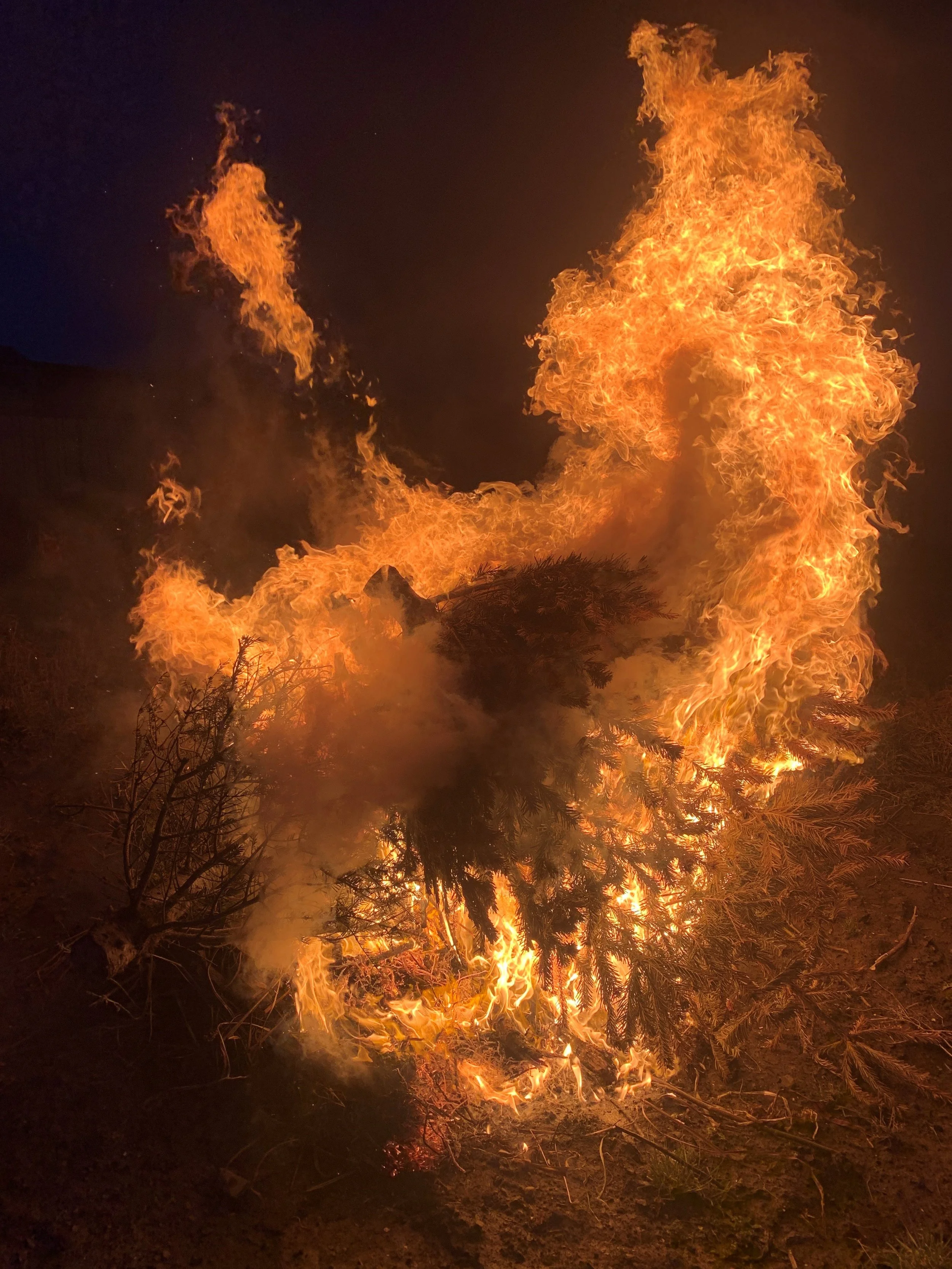
A memory from half a century ago came to me this week: a moorland fire that burned for days and caused devastating damage.
1976 has become a benchmark when it comes to discussing summer heat. There was widespread drought across the UK, water rationing, and media reports that blended alarm with celebration: of holidays in the sun, crowded beaches, and soaring ice cream sales. The maximum temperatures reached that year – 35.9C, in Cheltenham – has been exceeded so often that it seems almost mild in comparison to 21st century norms. Temperatures over 36C have become common recently, with the record high, set in Lincolnshire in 2022, being 40.3C. What made the summer of 1976 remarkable then, and still does, is that it was the culmination of a year-long period of exceptionally low rainfall. Not only was it hot, but it was very, very dry.
In our small village on Deeside that was good news for me and my pals. School was out, we were too old to hang about the house, too young to have a summer job. We were free. The warm days were filled with football in the park, swimming in a pool called the Dooker in the Beltie Burn, and above all circling endlessly around the village and the surrounding hills on our bikes. So when great plumes of smoke started billowing into the sky from the moor behind Pitmurchie House, a mile to the west of the village, what else was there to do? We jumped onto our bikes and rode off to investigate.
Pitmurchie House sat on a hilltop, gleaming white in the blazing sun. I suppose it was a modest 19th century laird’s house in reality, but to us it looked like the Taj Mahal as we pedalled towards it. There was a large central block and wings off to each side, all with full-height windows reflecting the light, and metal spikes on the roof-ridges like miniature versions of the Taj Mahal’s towers.
Shortly beyond the house, the road was blocked by a police car. We were told in no uncertain terms to get lost or risk being run down by a fire engine, as it raced off to refill its water tanks. We were only briefly disappointed, and headed back to the village to climb the monkey puzzle trees in the park, or beg our parents for 8p to buy a Zoom ice lolly.
It was later, watching reports on Grampian TV news, that I realised something scary was going on. Film showed firemen, tiny against the huge hillside, aiming hoses at walls of flame. Others whacked round the edge of the fire with what looked like mudflaps attached to broom handles. A fire chief spoke of hundreds of acres of gorse and peatland being ablaze. The only water source was miles away. His men were fighting to stop the fires spreading to local farms and villages – like ours!
The fire was so fierce, he said, that it was now burning underground. Peat was smouldering over a vast area. It could be weeks or even months before it went out. We might never know if it was really extinguished, or if banks of embers were still glowing down there, waiting for the chance to burst out in a great lowe once again. The idea sent shivers down my spine. That a fire could be burning underground, invisible, likely to blaze into life at the most unexpected moment: terrifying
I was relieved when we left for our summer holiday in Orkney a few days later. The ice creams of Shopping Week took my mind off the fires of Pitmurchie, and Rackwick was much more dramatic for swimming than the Beltie Burn. By the time we went home, rain had finally come and doused the fires for good.
Though in another sense, the fires have never gone out. The embers have smouldered for fifty years and the wildfires, when they erupt, are larger and more widespread than they were in the 1970s. Just a fortnight ago, Torphins was shrouded in smoke again, as it blew eastwards from the great blaze in the Cairngorms.
Fires burn across Scotland, England, and much of Europe. One of the worst is just outside Bordeaux. There’s talk in the wine trade of disaster, not because large areas of vineyards have been burned – not this time – but because thousands of tons of grapes may have been ruined by smoke. There are plans to try and rescue the harvest by making white wine from the smoke-tainted red grapes. The smoke mostly affects the skins, so if you can crush your spoiled grapes and bleed the juice off quickly, you might be able to make something drinkable. Look out, in a year or two, for blanc de noirs wines from châteaux previously known for their reds.
It’s small comfort to think of the winemakers’ ingenuity in rescuing at least part of their crop. The bigger story is the scary one: fire is smouldering underground, all across the continent, just waiting to blaze up and consume crops, livestock and human lives.
This diary appeared in The Orcadian on 6th August 2026. A new diary appears weekly. I post them in this blog a few days after each newspaper appearance, with added illustrations, and occasional small corrections or additions.